The word corruption is one of the most reprehensible terms in any language. Yet corruption is also one of the oldest phenomena in human history, and throughout the ages it has been one of the most destructive forces undermining societies and human civilizations. Long ago, the poet Elias Farhat said:
“No nation’s boundaries are ever breached by its enemies
unless corruption has already eaten away at its very bones.”
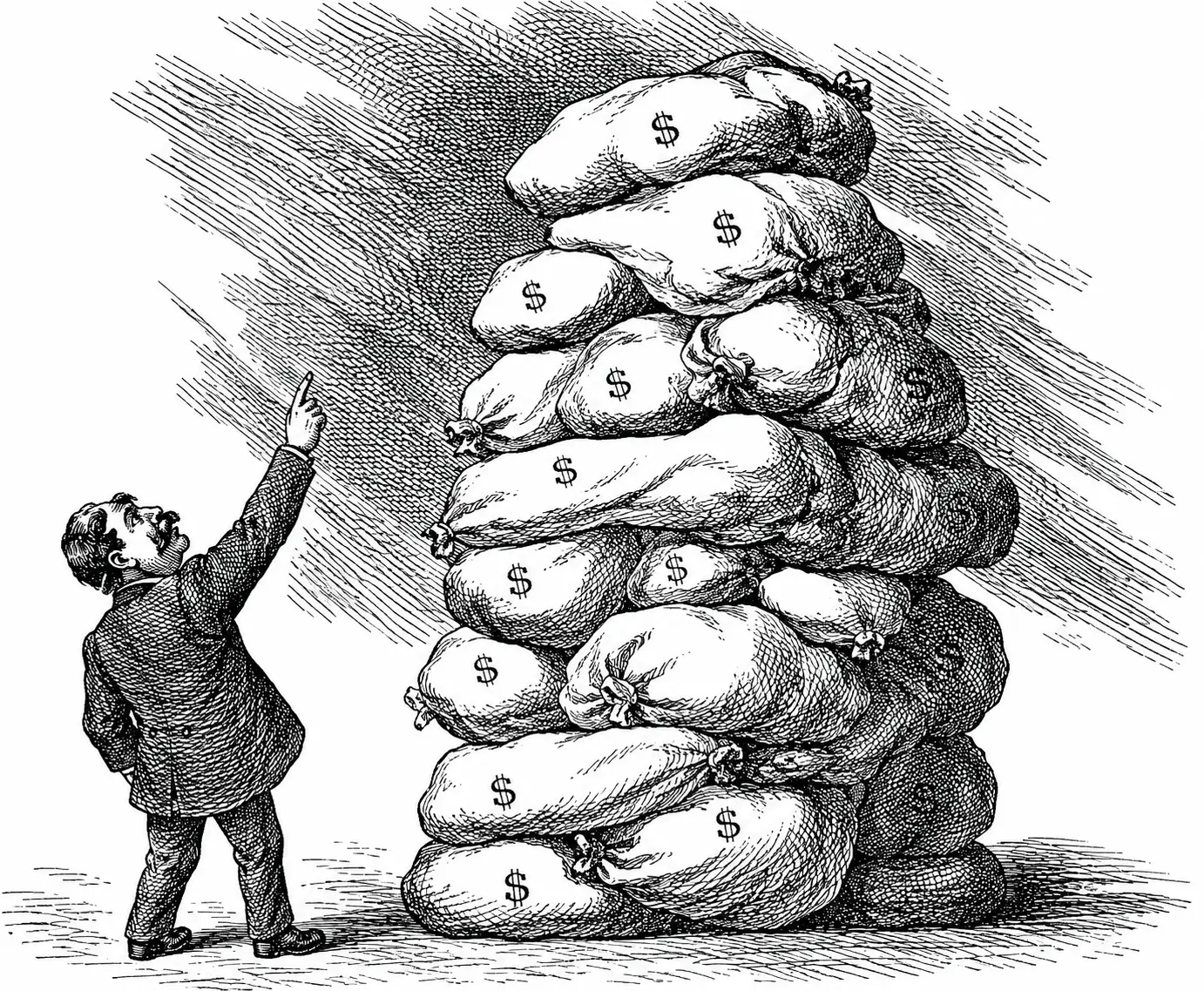
This is because corruption threatens the security and stability of societies and directly affects their economic, social, cultural, scientific, and every other aspect of life. Perhaps the most dangerous feature of corruption is that its greatest harm falls on the poor, the weak, and those who are already marginalized, thereby increasing their suffering. At the same time, it increases the gains of the wealthy, the privileged, and the influential, making them even richer, more powerful, and more domineering. Funds that should have been directed toward feeding the needy, treating poor patients, and educating their children instead end up in the pockets of the affluent, the wealthy, the powerful, officeholders, and capital owners. Because corruption is a clear form of injustice and abuse of power, God “does not love corruption,” as stated in the Holy Qur’an.
One of the most damaging consequences of corruption is that it strips the ruling authority of legitimacy and prestige and exposes it to ridicule and contempt, either because it protects corruption and the corrupt for ulterior motives, or because it is incapable of taking the decisions and measures necessary to trace the sources of corruption and eradicate them. If citizens see that the state remains inactive, fails to deter criminals, does not hold thieves accountable, and does not stop wrongdoers, they are justified in suspecting the government of complicity with them. A government that is negligent in matters involving public funds will undoubtedly lose public confidence. Governments must therefore enact deterrent laws, adopt strict measures, and take all necessary precautions to prevent corruption, regardless of its source or scale.
Another harmful effect of corruption is that it can bring development to a complete halt, particularly in developing countries with limited capacities. Investors considering a particular country are likely to avoid it if they detect widespread corruption, because a corrupt country offers insufficient guarantees for their investments and lacks stable policies. Instead, policies may change whenever the interests of corrupt actors require it, exposing investors’ funds to unpredictable risks. Even states intending to provide aid or grants may reconsider when they realize that corruption is widespread, because such funds may not reach the poor or strengthen state institutions, but instead flow into the pockets of corrupt officials, criminals, and those lacking conscience and integrity.
Corruption is therefore one of the greatest enemies of development, one of the strongest obstacles to progress, and one of the most damaging diseases affecting economic, social, and political life. It is therefore unsurprising that states and organizations at the local, regional, and international levels have combined their efforts to contain it, reduce its dangers, and free societies from its grip. Conferences, discussion forums, seminars, and workshops have been organized to highlight its risks and harmful consequences and to develop plans and strategies capable of combating and eliminating it.
Corruption has spread to almost every part of the world and has become so extensive that efforts to contain it often appear overwhelmed. The poet’s words have therefore become particularly relevant:
Corruption has spread everywhere, and the paths to wealth
have become reserved for those who take bribes or commit injustice.
In Sudan, this destructive disease has also spread widely and reached levels that have made the country a subject of ridicule and negative comparison. Corruption has affected virtually all facilities and institutions; ministries, banks, and educational institutions have not been spared. Figures have emerged concerning embezzled funds that are staggering in scale. At first, people were divided between those who believed and those who doubted such reports, until the news was confirmed and the allegations proved true. People naturally ask: where was the state while corruption was allowed to spread to such an extent that its stench became impossible to ignore?
Nevertheless, it is better to act late than not to act at all. In this article, therefore, we seek to contribute to the campaign against corruption and those who practice it. We regard this as a national duty in which everyone should participate from their respective position, sparing no effort. Corruption has become Sudan’s foremost problem and should therefore be given priority over many other national tasks at this critical stage in the country’s history. Corruption must be openly discussed and exposed without hesitation or fear, because transparency is one of the most effective antidotes to corruption. As Abbas Mahmoud Al-Aqqad said, “A nation that knows how to speak the truth openly and dares to confront falsehood removes the conditions in which corruption flourishes.”
In this regard, combating and eliminating corruption requires the combined efforts of the state and society through their various institutions. In addition to security, police, and judicial bodies, a number of social institutions can contribute to this campaign, including educational institutions, research and study centers, and the different forms of media. These institutions can provide information and research on corruption, its forms, methods, means of combating it, and relevant regional and international experiences.
Naif Arab University for Security Sciences in Saudi Arabia, for example, has provided valuable support to the National Anti-Corruption Commission, known as Nazaha. The university produced a number of doctoral and master’s studies from which the Commission benefited, covering such topics as public service ethics and their role in combating corruption, anti-corruption strategies, social culture and its relationship to integrity and transparency, globalization and corruption, the development of work systems and their relationship to strengthening integrity, and the role of governance rules in reducing corruption, among other valuable studies that helped inform the Commission’s plans and procedures.
Sudan also has several research centers, as well as departments of political science, strategic studies, and public administration at Sudanese universities, that could perform a similar role by directing some of their research toward this important objective. The Higher Security Academy, the Military Academy, and other institutions could also contribute to such a program.
Combating corruption also requires activating and enforcing relevant laws, strengthening legal and oversight mechanisms, and ensuring that corruption cases are resolved quickly. Although some have called for secrecy in dealing with such matters, the author believes that publicly naming and exposing corrupt individuals after their conviction by the courts is one of the most effective ways of combating corruption. The campaign against corrupt individuals should therefore be accompanied by a strong media campaign that condemns corruption and highlights its harmful effects on the one hand, and publicly exposes those convicted of corruption on the other, so that they serve as a warning to others and discourage them from engaging in unlawful enrichment. If an employee feels certain that punishment can be avoided, the temptation to engage in corruption may become much stronger, except for those restrained by conscience and faith.
In the long term, there is a need for political socialization and national education with clearly defined objectives. Broadly speaking, these objectives should aim to make corruption socially unacceptable even before it is criminalized by law, diminish the social standing of corrupt individuals, condemn them socially, create widespread aversion to both them and their conduct, and reject any tolerance of such behavior. At the same time, society should elevate national values associated with integrity, honesty, and personal restraint, while celebrating and honoring national figures known for their integrity.
Greater attention must also be given to professional ethics. Academic qualifications alone should not be considered sufficient for employment. Students at different educational levels should be equipped with the ethical principles of professional life. Ministries of higher education in some Arab countries have already introduced ethics as a compulsory course across all disciplines. Thus, there are courses in ethics for management, medicine, engineering, agriculture, and other fields, with the aim of preparing students morally and ethically alongside their academic and professional training.
Additional conditions should also apply to appointments in public service, particularly regarding the ethical qualities of graduates. Leadership positions should be entrusted to competent individuals who uphold national values, integrity, and financial probity. These qualities should form part of the core criteria used to evaluate public employees, and similar standards should apply in the private sector. Continued employment and promotion should likewise depend in significant part on assessments of these ethical standards, which should occupy a central place in the evaluation process.
In conclusion, these are broad observations on corruption, its dangers, and the efforts made to combat it in Sudan. God willing, this article will be followed by others examining regional and international experiences in fighting corruption and the lessons Sudan can draw from them. Corruption is a widespread phenomenon from which virtually no society is entirely free, and there are rich international and regional experiences that can be studied and adapted, for, as the saying goes, “Wisdom is the lost property of the believer.”
0 Comments