Scholars and thinkers have not reached a single, universally accepted definition of civil society. Some define it as “all institutions that enable individuals to access public goods and benefits without the intervention or mediation of the government” (Saeed Bin Saeed Al-Alawi).
Others argue that “civil society consists of a group of free and voluntary organizations that occupy the space between the family and the state in order to pursue the interests of their members, while adhering to the values and principles of respect, consent, tolerance, and the peaceful management of diversity and disagreement” (Saad Eddin Ibrahim).
.
Thus, civil society can be understood as the organized segment of society formed on the basis of the free will of its members. It upholds the values of tolerance, accepts diversity and differences, and relies on peaceful means and dialogue in its interactions with the government and other organizations in order to advance the interests of its members.
The Emergence of Sudanese Civil Society
The main organizations of Sudanese civil society emerged under colonial rule and, to a large extent, as a reaction to the practices of the colonial administration. Sudanese political parties began to take shape in the 1940s, particularly after the Atlantic Charter affirmed the right of peoples to freedom and democracy. This development stimulated intensive political activity, created space for open political engagement, and encouraged national forces to organize themselves into political parties.
The Ashigga Party, led by Ismail al-Azhari, was established in 1944 by elements advocating unity with Egypt and under the patronage of Sayyid Ali al-Mirghani. In 1945, the independence-oriented forces founded the Umma Party under the patronage of Sayyid Abd al-Rahman al-Mahdi.
As a result of the efforts of Sudanese students who had studied in Egypt, the first communist cell in Sudan was established in 1945 under the name Sudanese Movement for National Liberation, commonly known by its Arabic acronym, HASITU.
In the late 1940s, the Islamic Liberation Movement was established at Gordon College and later became one of the nuclei of the modern Islamic movement. At the same time, a number of Sudanese students studying in Egypt joined the Muslim Brotherhood there and brought its ideas back to Sudan. A popular current led by the late Ali Talib Allah also emerged. These three currents were eventually unified under the name “Muslim Brotherhood” in 1954.
A number of southern political parties also emerged, including the Southern Liberal Party between 1953 and 1958, the Sudan African National Union, and the Southern Front during the 1960s, alongside smaller parties such as the Peace Party, the Southern Democratic Party, and the Nile Party.
Later, a number of Arab nationalist parties appeared, including the Iraqi and Syrian branches of the Ba'ath Party, the Revolutionary Committees associated with Libya, and the Arab Nasserist Party.
The organized labor movement began with the establishment of the Workers’ Affairs Association in Atbara in 1947. In 1949, the Sudan Workers’ Trade Union Federation was formed.
The farmers’ movement can be traced to 1947 with the creation of the Farmers’ Representatives Association, which was later replaced by the Gezira Farmers’ Association. Communists played a significant role in establishing this body, which became the Gezira Farmers’ Union in 1953.
Women’s organizations began with the establishment of the Educated Girls’ Association in 1947. The Sudanese Women’s Union was formed in 1952. Student organizations began with the establishment of the Culture and Reform Society at Gordon College in 1938, followed by the Students’ Union in 1940.
After independence, professional organizations began to emerge, including associations and unions of doctors, engineers, teachers, farmers, judges, lawyers, journalists, university professors, artists, and theater professionals.
All of these organizations form part of Sudanese civil society, although it is difficult to examine the origins of each one in detail.
Some Challenges Facing Sudanese Civil Society
Sudanese civil society faces several major challenges. In our view, its ability to perform the role expected of it depends largely on its capacity to overcome these problems and develop effective solutions. These challenges include the following:
1. Conceptual Ambiguity
One of the greatest problems facing Sudanese civil society is the ambiguity surrounding the concept of civil society itself and its role in social and political life, not only among ordinary participants but even among some of its leaders.
Beyond the broader conceptual ambiguity and the large number of definitions that sometimes contradict one another, the concept of civil society in the minds of Sudanese leaders has often been marked by noticeable confusion. The following discussion illustrates some of that ambiguity within Sudanese political discourse.
In the Sudanese context, the term “modern forces” became widely used, particularly during the 1980s, to describe the active forces of civil society. Political actors used the term in contrast to sectarianism, especially because all democratic elections held in Sudan had been dominated by the major traditional parties, particularly the Umma Party and the Democratic Unionist Party.
Thus, in contrast to “sectarianism,” which was associated with traditionalism and rural society, there emerged increasing discussion of the “modern forces,” understood to include graduates, intellectuals, lawyers, university professors, organized professional groups such as trade unions, and sectoral organizations representing women, students, and youth. There is little doubt that these organizations largely correspond to what is now referred to as civil society.
After the overthrow of Jaafar Nimeiri’s regime on April 6, 1985, there was extensive debate about the modern forces and the need to represent them in the next parliament. Yet despite their insistence on such representation, Sudanese political forces were unable to offer a clear definition of who exactly these “modern forces” were.
The Ministerial Committee for Surveying the Views of Political Forces on the Electoral Law therefore noted in its report that “the majority of political forces support the representation of the modern forces in the forthcoming parliament, despite the difficulty of defining them in a decisive or scientific manner.”
The committee’s rapporteur, Amin Mekki Madani, also stated that these political forces “insist on and remain keen to represent the modern forces without providing a clear definition of them.” He went further, noting that in October 1985, fifty-one trade unions signed a charter of political parties that called for “the issuance of a democratic law guaranteeing fair representation of the modern forces and women.” Madani argued that this clause itself demonstrated the ambiguity surrounding the concept, since women were already an integral component of the modern forces.
In reality, considerable ambiguity still surrounds this concept, not only among ordinary people but also among many intellectual and opinion leaders.
Another aspect of this conceptual confusion concerns the question of which forces and groups should be included within civil society. Some argue that political parties are an integral part of civil society and, indeed, among its most important organizations, particularly in a country such as Sudan, where democratic development remains incomplete and political parties serve as leading forces in the process of democratization.
Others, however, exclude political parties from civil society on the grounds that they seek to attain political power.
In this context, some scholars call for moving beyond the traditional definition of civil society, which is heavily influenced by Western historical experience, and for redefining the concept in a way that better reflects African realities in general and Sudanese realities in particular.
From this perspective, some emphasize the central role of the tribe in African societies, including Sudan, in social, political, and economic affairs, and therefore regard tribal structures as an authentic component of civil society. Others also identify Sufi orders and native administration as integral parts of Sudanese civil society because of the significant political, economic, and social roles they play.
The author supports the idea of redefining civil society in accordance with the realities of each society. The Western definition that spread into the developing world was itself a product of Western social conditions. African and Sudanese intellectuals should therefore work to develop a definition of civil society that is compatible with their own social realities.
Yet broad debate and criticism of Western concepts without actually developing a suitable alternative definition is not sufficient to advance civil society or strengthen its role.
Agreement on a definition of civil society that reflects Sudanese realities is therefore an essential prerequisite for developing this sector. It is impossible to discuss the role of civil society without first identifying what is meant by civil society in the Sudanese context and which forces fall within its framework. Only then can its effectiveness, successes, failures, and the degree of coordination among its different components be properly assessed.
2. Politicization
We believe that excessive politicization is at the heart of the problems facing Sudanese civil society. It is perhaps the greatest challenge confronting its organizations, limiting their ability to perform their functions effectively, threatening the unity of their membership, and fragmenting their loyalties.
Most civil society organizations, including trade unions and women’s and student organizations, originally emerged as extensions of political parties in the context of the latter’s struggle against colonial rule. They were therefore politicized from the outset because of their close links to political parties.
These organizations played an important national role in the struggle against colonialism. They supported political parties in their confrontation with the colonial administration and cooperated with one another in resisting colonial policies. The Workers’ Union, for example, expressed solidarity with students at Khor Taggat, supported the police strike, and stood alongside nationalist parties in opposing the Subversive Activities Act of 1952.
There is broad agreement concerning the important national role played by these organizations during the colonial period. The more controversial issue concerns their deep involvement in political struggles after independence.
After independence, these organizations should have sought greater autonomy from political parties, but this did not occur. Some political parties, particularly ideological ones, competed intensively to secure the loyalty of these organizations. Workers’, farmers’, women’s, youth, and student organizations consequently became arenas of competition among rival parties.
This had several negative consequences. Civil society organizations were frequently drawn into confrontations with political authorities over issues that were primarily political and did not necessarily serve the direct interests of their membership. This widened the gap between organizational leaderships and their grassroots constituencies and generated internal conflicts based almost entirely on political loyalties.
For many years, competition was particularly intense between the two major ideological forces, the Communist Party and the Islamic movement. Civil society organizations became one of the main arenas in which their rivalry was played out.
The workers’ movement split between the General Federation of Sudanese Trade Unions, associated with the Communist Party, and the National Workers’ Union, associated with the Islamic movement. Youth organizations were divided between the Sudanese Youth Union, which had communist leanings, and the National Youth Organization, which had Islamist leanings. Women’s organizations were likewise divided between the Sudanese Women’s Union, associated with the Communist Party, and the National Women’s Front, associated with the Islamic movement.
This politicization led to conflict and confrontation within these organizations and had damaging consequences for their unity, effectiveness, and role in Sudanese political life.
It also produced contradictions in their positions. For example, the workers’ union associated with the Communist Party rejected a request from the first national government to freeze workers’ demands on the grounds that the period was one of liberation rather than development. The union responded with the slogan “there can be no liberation without development” and insisted that workers would not suspend their demands.
Yet in 1964, during the government of the Professional Associations Front, the same union voluntarily announced a freeze on workers’ demands without being asked to do so and even contributed one day’s wages from workers in support of the government.
The reason for this contradictory position was excessive politicization. The union rejected freezing demands when opposing the Unionist-led government, but accepted the same measure under the Professional Associations Front government, in which communists exercised significant influence.
During the third democratic period from 1986 to 1989, political demands once again dominated the activities of the trade union alliance. In a memorandum addressed to the prime minister, the alliance demanded the repeal of the September Laws, an end to the war in southern Sudan, the appointment of the right person to the right position, and an end to the marginalization of the modern forces.
Prime Minister Sadiq al-Mahdi responded that these demands represented a partisan position rather than the view of the majority and that the Charter of the Uprising did not provide for replacing the September Laws with the 1974 laws, nor did it prescribe a specific level of representation for the modern forces.
The trade union alliance nevertheless chose confrontation with the political authorities and used strikes as a means of paralyzing government activity. Strikes became one of the defining characteristics of that period, totaling 332 strike days over the three-year lifespan of the third democratic government.
The politicized trade union alliance played a major role in weakening the democratic system through strikes with a distinctly political character. This had negative consequences not only for the unity of its membership but for Sudanese political life as a whole.
Civil society organizations are a fundamental pillar of democracy. Political parties that genuinely support democracy should therefore work to strengthen these organizations. They cannot become stronger, however, if political parties continue trying to capture and control them, because such efforts inevitably divide their membership.
At the same time, civil society organizations themselves bear primary responsibility for safeguarding their autonomy. They must plan for their own future independently of political authority. If they and the political parties fail to plan for their own future, they will inevitably become part of other actors’ plans.
These organizations must therefore fully understand their role and focus primarily on addressing the interests of their members, while avoiding unnecessary immersion in political struggles. They should also strengthen relations among themselves, since cooperation with peer organizations is often more useful to them than close dependence on political parties.
Coordination with political parties can still take place on major national issues, but it should be based on equality rather than political domination.
3. Managing Ethnic and Cultural Diversity in Sudan
Sudan is often described as a “miniature Africa” because of its extensive ethnic, linguistic, and religious diversity. It also suffers from unbalanced development, sometimes referred to as economic pluralism, whereby development projects have historically been concentrated in the central regions while peripheral areas have received far fewer investments. This has contributed to what later became known as the problem of marginalized regions.
This complex reality, combined with the poor management of diversity by successive governments, has had negative effects on civil society and weakened its role.
Although some argue that civil society organizations are among the most effective mechanisms for integrating citizens because they are not founded on ethnic or religious identities, the Sudanese experience suggests otherwise. In Sudan, individuals are often classified first according to ethnic identity, while religion also plays an important role in social classification.
This reinforces the need to redefine civil society in light of Sudanese realities. Instead of becoming spaces for integration, intellectual exchange, and the transcendence of sub-national loyalties, civil society organizations have themselves been affected by tribalism, regionalism, and political polarization. These divisions have distracted them from their core functions and reduced their effectiveness.
Addressing this problem therefore requires a broader national strategy capable of dealing with national unity and balanced development. It also requires media policies aimed at promoting national unity through carefully designed processes of political and social socialization integrated into national development plans.
4. The Funding Problem
Funding is one of the greatest obstacles facing Sudanese civil society. A central issue concerns the need to balance the search for financial resources with the preservation of organizational independence.
Some organizations have insisted on maintaining complete independence from both political authorities and foreign donors, but this has left them without adequate funding, undermining their plans and preventing them from achieving their objectives.
Other organizations have sought financial support from foreign actors or domestic governments, only to lose much of their independence and see their activities redirected in ways that conflict with their original purposes.
Some human rights organizations, for example, became closely aligned with governments because of funding and ultimately supported those same governments in the face of human rights violations by issuing misleading reports and providing political cover.
Likewise, some civil organizations became dependent on foreign actors that used them in ways that conflicted with the interests of their own citizens, even where their activities appeared externally consistent with their stated objectives.
In a poor country such as Sudan, associations are often unable to finance their activities through membership fees alone. Funding therefore becomes a constant threat to their independence, survival, and continuity.
There is thus an urgent need for collective efforts to address the funding problem. The government should support civil society organizations while guaranteeing their independence. This would require substantial constitutional and legal reforms to ensure that financial support reaches these organizations without allowing political authorities to interfere in their activities.
It would also require an intellectual shift toward recognizing the complementary relationship between the state and society. The state is not necessarily in contradiction with civil society, and many fields require cooperation between state institutions and civil society organizations.
5. Tensions Between the State and Civil Society
Another major obstacle is the continuing tension between the state and civil society organizations. Accusations are frequently exchanged between the two sides.
The state often views civil society as politically biased and regards it as little more than an extension of opposition organizations seeking to pressure the government in pursuit of specific political objectives.
Authorities may also accuse civil society organizations, particularly those working in human rights, of maintaining links with foreign actors because detailed information about domestic conditions sometimes circulates among international human rights organizations and bodies such as Amnesty International. Such suspicions often lead governments to adopt restrictive attitudes toward these organizations.
Civil society organizations, for their part, may regard conflict with the state as inevitable because they see a fundamental contradiction between their objectives and those of political authority.
From their perspective, governments seek to remain in power and may therefore adopt political and security measures that civil society rejects, particularly because many civil organizations see themselves as leading forces in democratization and political participation.
Human rights organizations, in particular, seek to expose abuses by political authorities, which governments are often unwilling to tolerate. This creates a built-in source of conflict between the two sides.
Even in the most democratic countries, however, disputes arise between governments and civil society organizations over jurisdiction, human rights, corruption, environmental protection, good governance, transparency, and other important issues.
The nature of the relationship depends largely on the degree of democracy prevailing in the country, its legal and constitutional framework, the political space available to civil society organizations, and the effectiveness of those organizations, including their domestic and international networks, their capacity to reach society, and their ability to mobilize citizens.
In Sudan, where politicization has long characterized civil society organizations, conflicts between the state and civil society frequently become conflicts between political forces.
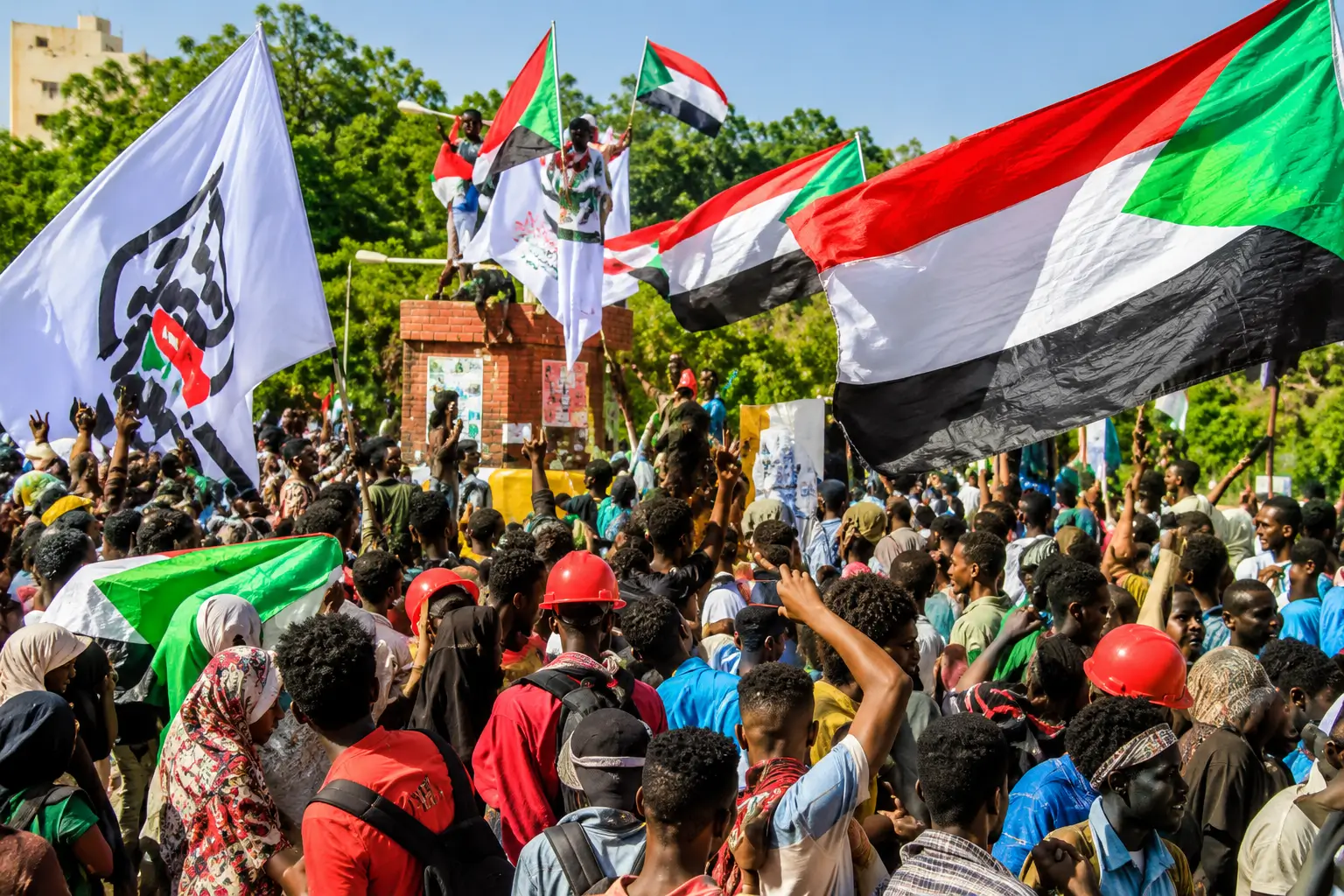
This has been reflected in politically motivated strikes led by trade unions, episodes of civil disobedience, and revolutions aimed at overthrowing governments, as occurred in October 1964 and April 1985, as well as in the nature of the political demands advanced by these groups.
This history produced deep hostility between civil society and political authorities and sometimes led governments to dissolve civil society organizations. During the May regime, for example, in the context of conflict with the Communist Party, the government dissolved the Workers’ Union, the Sudanese Women’s Union, and the Youth Union, and suspended newspapers associated with these organizations.
A Future Vision for Sudanese Civil Society
The author believes that the success of civil society in fulfilling the responsibilities entrusted to it depends largely on its ability to find solutions to the problems discussed above.
For civil society to perform its role effectively, there must first be agreement on which organizations and institutions fall within its scope. This would make it easier to divide responsibilities among different institutions in ways that improve the political, social, and economic environment.
It is also difficult to measure the effectiveness of civil society without clear indicators. Yet such indicators cannot be applied unless the organizations included within the concept of civil society are first identified.
Since excessive politicization is perhaps the greatest problem facing Sudanese civil society, political parties must distance themselves from these organizations and stop attempting to capture them. Otherwise, civil society will remain subordinate to political parties.
Relations between parties and civil society organizations may certainly exist, but they should be based on equality rather than domination.
Civil society organizations must also plan for their own future and define their objectives clearly so that they do not become part of the agendas of other actors. They should avoid becoming immersed in political conflicts unless their own interests clearly require such involvement and no reasonable alternative exists.
Finally, if these organizations are to perform their mission effectively, they must strengthen their relationships with one another, since cooperation among civil society organizations is likely to be more beneficial than dependence on political parties.
0 Comments