Introduction
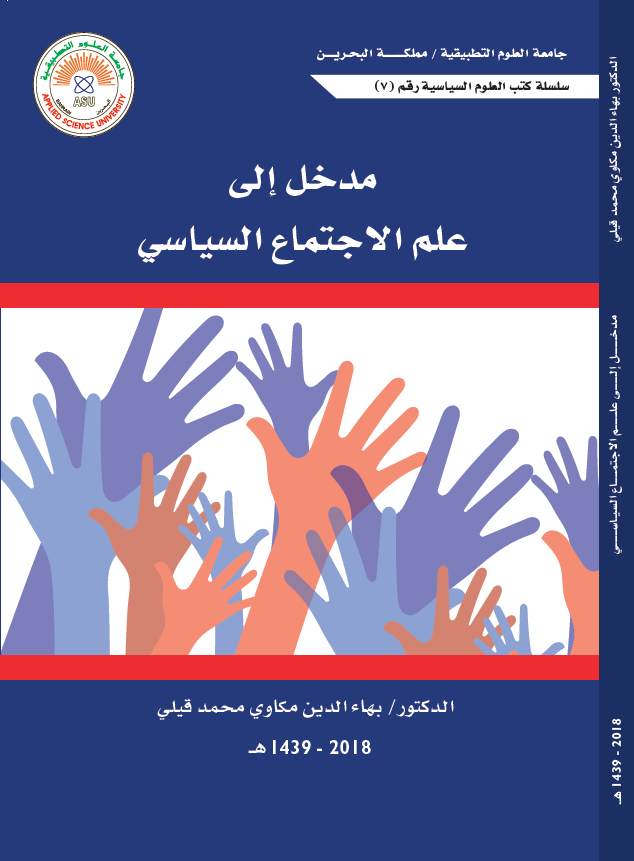
Political Sociology occupies a prominent position today among the social sciences due to its depth and its comprehensive approach to political phenomena within a broader context that incorporates the social, political, and cultural realities surrounding these phenomena. Despite the relatively recent emergence of this field, it has, within a short period, succeeded in establishing its presence, steadily developing, and attracting many scholars, thinkers, and researchers. Consequently, universities in most parts of the world have incorporated it as a compulsory subject within political science departments.
Political Sociology examines the sociology of the state, meaning its relationship with other social forces and institutions. Therefore, it addresses all social and economic forces and institutions that influence the formation of political phenomena, whether they are formal or informal. Accordingly, Political Sociology focuses on the study of civil society, political parties, interest groups, public opinion, political culture, political socialization, bureaucracy, ideology, political participation, and political and social elites, in addition to many other topics. The author has attempted to cover all areas of political sociology without excessive detail or inadequate simplification, striving to present the topics discussed in the book in a clear, comprehensive, and integrated manner, free from ambiguity that hinders understanding and from oversimplification that diminishes essential ideas.
The book is divided into an introduction and sixteen chapters. Chapter One, which is an introductory chapter, defines Political Sociology, explains its origins, development, major fields, and the research methods used in its study. Chapter Two, entitled “Theoretical Trends in Political Sociology,” discusses the relationship between the state and society in political thought from ancient Greece to the present era, considering this relationship as the central theme around which political debates have revolved throughout different historical periods.
Within the same framework, Chapter Three discusses civil society as one of the clearest examples of the relationship between the state and society. Civil society has become a widespread phenomenon throughout the world by the end of the twentieth century and the beginning of the twenty-first century, with civil society organizations spreading globally. This required studying this unique phenomenon, redefining civil society, and examining its roles and functions in contemporary life. Chapter Four addresses political elites, discussing the concept of the elite, its characteristics, and classical and contemporary theories in the study of elites.
Chapter Five discusses bureaucracy, as bureaucracy has become a dominant force influencing political activity and controlling various aspects of economic, social, and political life. This has raised questions regarding the position of administrative officials within the state, whether bureaucracy benefits society or represents a harmful structure that should be eliminated, and the possibility of reconciling bureaucracy with democracy. Chapter Six focuses on public opinion, including its concept, foundations, types, measurement methods, and other important issues related to public opinion, in addition to the concept, characteristics, and influence of media on public opinion.
Chapter Seven addresses political culture, discussing its concept, its relationship with the general culture of society, types of political cultures, and its role in shaping political reality in general. Chapter Eight discusses political socialization, including its concept, objectives, means, and related theories such as systems theory and the theory of control or domination.
Chapter Nine examines ideology, including its concept within different intellectual contexts, particularly the Marxist and liberal interpretations of ideology. It also discusses the role of ideologies in shaping political and social reality while considering the intellectual debates surrounding this topic. Chapter Ten addresses participation, defining political participation, characteristics of political participants, levels of political participation, motivations for participation, and reasons for political withdrawal.
Chapter Eleven discusses the concept of political parties, their basic elements, types, functions, methods, indicators of effectiveness, and patterns of party systems. Chapter Twelve examines interest groups, including their definition, components, functions, and the methods they use to achieve their interests.
Chapter Thirteen discusses theories of development in developing countries and the future of these countries in light of modernization and dependency theories. Chapter Fourteen addresses ethnic and racial conflicts and issues of national integration.
Chapter Fifteen examines institutionalization, good governance, and the dialectical relationship between them. Chapter Sixteen discusses political stability, including its concept, dimensions, measurement indicators, and indicators of political instability.
The book includes a number of terms related to Political Sociology, along with their English equivalents, to assist students in accessing English-language sources.
I ask Almighty God to make this work sincerely devoted to Him and to place it in the balance of good deeds “on the Day when neither wealth nor children will benefit, except one who comes to Allah with a sound heart.”
May Allah’s peace, blessings, and grace be upon the best of His creation and the leader of His messengers, Muhammad bin Abdullah, and upon his family and all his companions.
Author
Manama 2018م

0 Comments