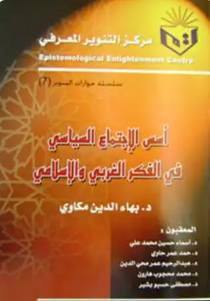
Although writers, researchers, and scholars of politics and sociology agree that the ideal image of political societies is a state that is ethnically and culturally homogeneous, studies conducted in this field have confirmed that reality is far removed from the image drawn by these scholars, researchers, and writers.
Scientific studies have revealed that diversity, rather than homogeneity, is the characteristic that defines today’s state, to the extent that it can be said that ethnic plurality is the norm, while homogeneity represents an exception to this norm. This is because studies conducted on the countries represented on the world map have shown that only 9% of these countries are characterized by homogeneity, whereas 91% of the world’s countries are characterized by ethnic and cultural diversity.
Therefore, the methods of managing diversity and their implications for security, stability, and development represent the central theme around which this book revolves. The book compares the foundations of human social organization in Western thought on the one hand and the foundations of human social organization in Islamic thought on the other hand. The author hopes that this book will represent a distinguished contribution to scientific efforts aimed at establishing successful foundations for managing ethnic and cultural diversity in general, and in Islamic countries in particular.
Loading Book
0 Comments