
Blog Details
If we were establishing a university in 2040, would we begin by building a campus, creating colleges and departments, and designing degree programmes lasting four years or more? Or would we first ask what universities are expected to achieve, and whether their familiar structures remain the best way to do so?
Universities developed when access to specialised knowledge depended largely on bringing academics, students, libraries and laboratories together in one place. That arrangement served higher education for centuries, but the conditions that shaped it are changing. Knowledge is no longer confined to lecture halls or university libraries. Digital resources and online platforms have widened access to learning, while artificial intelligence can explain difficult concepts, assist with analysis and support individual study. None of this makes universities unnecessary, but it challenges the assumption that providing access to knowledge should remain their principal function.
What distinguishes a university is not simply the information it delivers, but its ability to develop intellectual judgement, encourage independent inquiry, advance research and establish credible standards of academic achievement. These responsibilities may become more important as information becomes easier to obtain but harder to assess. Academics may consequently devote less time to presenting information readily available elsewhere and more to discussion, supervision, research and the assessment of learning. University campuses may also place greater emphasis on laboratories, practical training and spaces for academic collaboration.
A more substantial change may arise from the relationship between education and employment. The traditional model assumes that individuals complete their university education early in life and then rely on that foundation throughout their careers. Technological change is making this assumption increasingly difficult to sustain in many professions. Universities will therefore need to accommodate people who return to education throughout their working lives, often while remaining in employment. Shorter programmes, professional qualifications and flexible learning arrangements may become a larger part of their work. The degree will remain important, but graduation may no longer mark the end of a person’s formal relationship with a university.
Research presents another reason to reconsider existing institutional arrangements. Problems such as climate change, public health, energy security and artificial intelligence rarely fall within a single academic discipline. They also require expertise and facilities that few institutions can provide entirely on their own. Universities may therefore develop closer research partnerships, share specialised facilities and establish joint academic programmes. Some may find it more productive to concentrate on areas where they have genuine strengths rather than attempting to offer every discipline or maintain every research capability independently.
These developments could produce a wider range of institutional models. Some universities may integrate artificial intelligence extensively into teaching, research and administration. Others may operate through networks that allow students to study at different institutions and researchers to use shared facilities. More specialised universities may emerge alongside institutions focused on continuing professional education. These approaches need not be mutually exclusive. A university could combine several of them according to its resources, academic priorities and the needs of the society it serves. The important question is whether its organisational structure supports its purpose, rather than merely reproducing arrangements inherited from an earlier period.
For Qatar and the wider Gulf region, this discussion has particular relevance. Over recent decades, Gulf countries have invested heavily in universities, research infrastructure and international academic partnerships. These investments have strengthened higher education and provided an important foundation for economic diversification. The next stage offers an opportunity to reconsider how these resources are used. Greater cooperation could support joint postgraduate programmes, shared research facilities and complementary areas of specialisation, particularly in fields such as energy, water security, healthcare and emerging technologies.
Such cooperation would not require abandoning established universities or diminishing their achievements. It could build on existing strengths while allowing institutions greater flexibility in organising teaching and research. Similar opportunities exist across the Arab world, where stronger academic partnerships could help universities overcome limitations that would be difficult to address individually.
Yet institutional change raises questions that technology and partnerships alone cannot resolve. Universities have traditionally combined teaching, research, professional training, assessment and the awarding of qualifications within a single institution. If these activities become more widely distributed, responsibility for academic standards will need to be clearly defined. Who should be accountable for the quality of a programme delivered by several institutions? Which university should award the qualification? And how can academic independence be protected as institutions become more dependent on external partnerships and commercial funding?
These are questions about the credibility of higher education, not simply its administration. Institutional flexibility cannot come at the expense of academic standards, independent scholarship or public trust. Any new university model must address these responsibilities as carefully as it addresses efficiency and access.
Nor should we assume that all universities will follow the same path. Medicine, engineering and other practice-intensive disciplines will continue to require specialised facilities, supervised training and substantial face-to-face engagement. Accreditation requirements, financial circumstances and national priorities will also influence institutional choices. Traditional universities are therefore unlikely to disappear, but they may become part of a more varied higher education landscape.
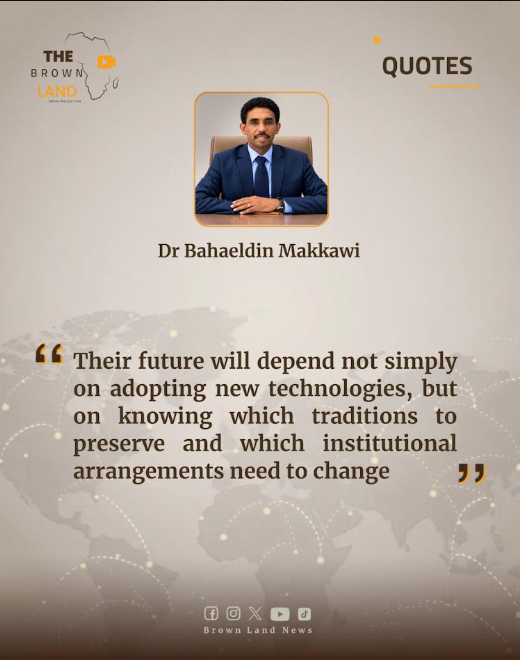
For many years, university development has been measured largely through new campuses, additional programmes, improved facilities and positions in international rankings. These indicators will remain relevant, but they reveal relatively little about whether an institution is organised to meet changing educational and social needs. By 2040, a more important measure may be how well universities fulfil their academic responsibilities under conditions very different from those in which their present structures evolved. Their future will depend not simply on adopting new technologies, but on knowing which traditions to preserve and which institutional arrangements need to change.
The question, then, is not whether universities will survive. It is whether we will have the judgement to rethink how they work, rather than merely modernising the institutions we have inherited.
By Dr Bahaeldin Makkawi
Qatar University
https://x.com/brownlandnews/status/2116600759580340644?a=SnFj0qYAx2tBRKJWRJQ&s=12
0 Comments